
Introduction: Understanding Multi-Year Indian Tourist Visas
The landscape of international travel has been fundamentally transformed by the introduction of digital immigration frameworks, and the subcontinent is no exception. For decades, securing a long-term travel permit required physical visits to consulates, surrendering your passport for weeks, and navigating complex bureaucratic hurdles.
Today, the electronic travel authorization system has completely modernized this process, making multi-year travel permits accessible to millions of global explorers, business professionals, and diaspora members. When evaluating the 1 year vs 5 year India visa options, travelers are often amazed by the sheer convenience and flexibility these digital categories provide.
Both options are designed to eliminate the friction of repeated paperwork, allowing you to focus entirely on your journey rather than administrative logistics. Whether you are planning a comprehensive cultural expedition, visiting extended family, or utilizing the region as a base for broader South Asian adventures, the digital framework supports your ambitions seamlessly.
Travelers from the United States frequently leverage these multi-year permits to explore everything from the bustling streets of Delhi to the serene backwaters of Kerala without the stress of reapplying for every single trip. The electronic system is directly linked to your unique passport number, meaning you simply carry a printed copy of your approval and your physical passport when you travel.
Understanding the nuanced differences between the one-year and three-year or five-year configurations is the first critical step in optimizing your travel strategy. By analyzing your specific routing needs, frequency of visits, and long-term travel goals, you can select the exact authorization tier that perfectly aligns with your lifestyle.
This comprehensive guide will break down the structural benefits, financial considerations, and legal boundaries of both multi-year options, empowering you to make a highly informed decision before you even begin your digital application, keeping in mind that all travel permissions are strictly subject to approval by Indian authorities.
The 1-Year Tourist eVisa: Benefits and Ideal Use Cases
The one-year electronic travel authorization is a masterclass in balancing affordability with exceptional flexibility. Priced at a standard government fee of 40 dollars for most eligible nationalities, this category provides a full 365 days of multiple-entry privileges from the exact moment it is approved by the immigration authorities.
Unlike short-term permits that restrict you to a single or double border crossing, this extended option allows you to enter and exit the country as many times as you need throughout the entire year. This makes it the absolute ideal choice for travelers planning a comprehensive gap-year adventure, a multi-month backpacking expedition, or those who intend to take two separate holidays within a twelve-month period.
For instance, you might spend a month exploring the northern mountain ranges during the summer, fly back home for the autumn, and then return in the winter to experience the vibrant festivals and warmer southern climates. Travelers from the United Kingdom often utilize this specific configuration to seamlessly integrate their subcontinental travels with side trips to neighboring nations like Nepal or Sri Lanka, knowing their re-entry is fully guaranteed.
The application process for this tier is identical to the short-term options, requiring only a clear digital scan of your passport bio page and a compliant photograph. However, because the 365-day validity clock begins on the day of approval rather than the day of arrival, strategic timing is essential.
You must apply close enough to your departure date to maximize your active validity window, but early enough to accommodate the standard processing times. By securing this one-year permit, you effectively purchase a full year of absolute travel freedom, removing the administrative friction that traditionally accompanies international border crossings and allowing your itinerary to evolve naturally.
The 5-Year Tourist eVisa: Long-Term Flexibility and Value
For those who view travel not as a singular event but as a continuous, integrated part of their lifestyle, the five-year electronic travel authorization represents the ultimate tier of convenience. Priced at a standard government fee of 200 dollars, this premium category grants multiple-entry privileges that remain active for a full 60 months from the date of approval.
This extended validity is an absolute game-changer for frequent corporate travelers, digital nomads, retirees with seasonal migration patterns, and diaspora members who regularly return to visit aging relatives or attend annual family weddings. The sheer logistical relief of knowing your travel documentation is fully secured for half a decade cannot be overstated.
You can book a spontaneous weekend flight to attend a cultural festival, or plan a three-month winter migration to escape harsh northern climates, without ever needing to fill out another application form, upload another passport scan, or pay another government processing fee. Travelers from Australia who frequently use the subcontinent as a vibrant, affordable hub for their broader Asian explorations find this five-year setup indispensable.
It transforms the border crossing process from a major administrative project into a trivial formality. Furthermore, holding a long-term, multi-year permit often provides a psychological sense of belonging and ease; you are no longer a temporary visitor scrambling against a ticking clock, but a welcomed guest with a long-term invitation.
While the upfront cost is higher than the short-term options, the amortized cost per trip drops dramatically if you visit even just twice within the 60-month window. This tier is specifically engineered for those who demand maximum spontaneity and minimum bureaucracy, ensuring that your passport is always ready for your next adventure at a moment's notice.
Strategic Cost-Benefit Analysis: 1-Year vs. 5-Year
When conducting a strategic financial analysis of the 1 year vs 5 year India visa options, the numbers reveal a compelling case for long-term planning. At a government fee of 40 dollars for the one-year option and 200 dollars for the five-year option, the upfront difference is 160 dollars.
If you are absolutely certain that you will only visit the country once in the next twelve months and have no plans to return, the one-year option is the most economical choice. However, if your travel style involves frequent regional exploration, the mathematics quickly shift in favor of the extended option.
Consider the hidden costs of the short-term permit: every time you need to reapply, you must pay the government fee again, take time out of your schedule to gather documents, and risk potential processing delays. To fully understand how these timelines interact with your specific seasonal plans, we highly recommend reviewing our comprehensive guide on India tourist eVisa duration options.
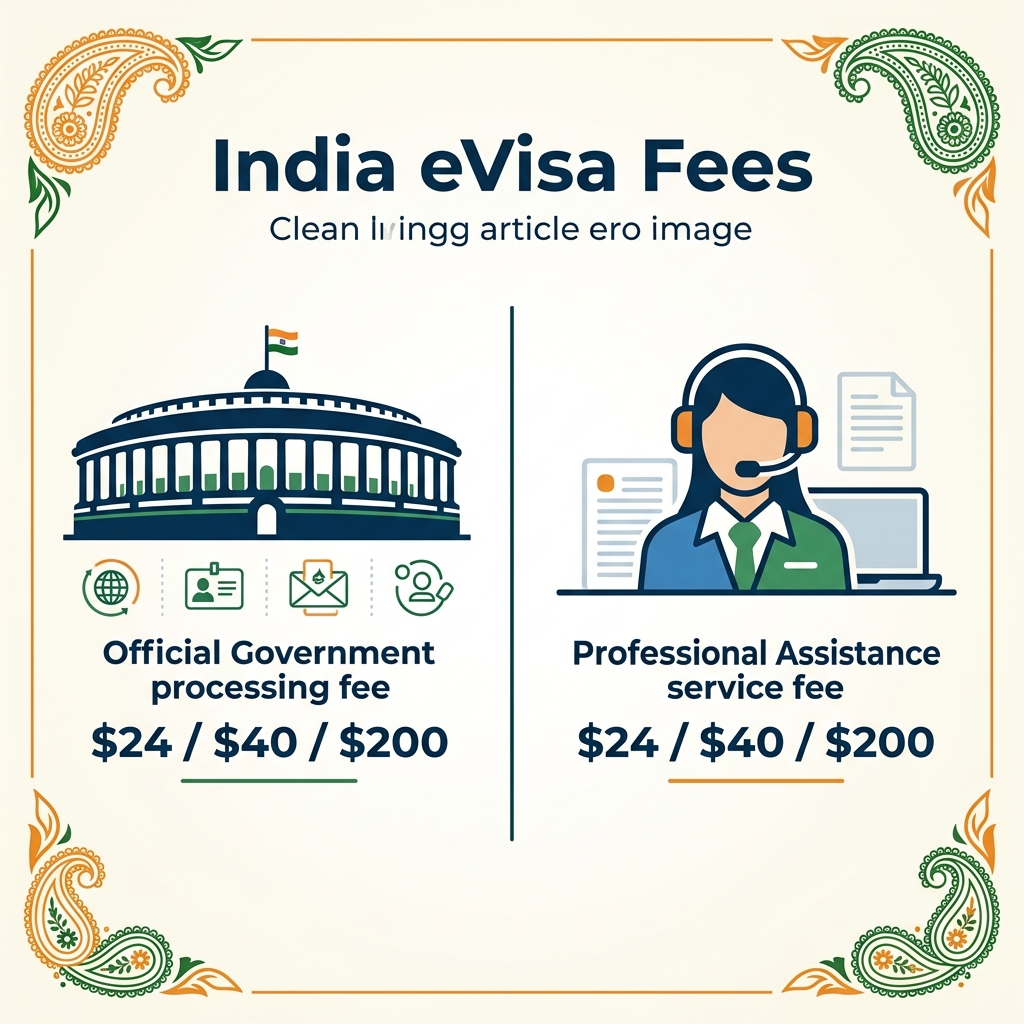
When utilizing an independent assistance service like Get India E-Visa, you will also encounter a separate service fee. We believe in complete transparency, which is why our platform clearly separates the mandatory government charges from our independent service fees.
Get India E-Visa is an independent assistance service. We are not affiliated with the Government of India, and we do not issue visas or guarantee approvals. All final decisions rest solely with the Indian immigration authorities, and all applications are subject to approval by Indian authorities.
Our service fee covers comprehensive, human-led support, including manual document verification, photo formatting, and continuous status monitoring. Travelers from Canada appreciate our strict privacy-first approach, where sensitive documents are only requested through encrypted channels after an initial assessment.
By upgrading to the five-year tier, you lock in your government fees and service assistance for half a decade, effectively insulating yourself against future fee hikes and administrative friction.
Differentiating Overall Validity from Continuous Stay Limits
The most critical concept to master when utilizing any multi-year travel authorization is the strict legal distinction between the overall validity of the document and your maximum continuous stay limit. This is where many well-intentioned travelers make severe errors that lead to heavy overstay penalties.
While your one-year or five-year permit allows you to cross the border an unlimited number of times, it does not grant you the right to reside in the country continuously for 365 days or 60 months. For the vast majority of nationalities, the immigration authorities enforce a strict maximum continuous stay of 90 consecutive days per individual visit.
Travelers from South Africa and most European nations must adhere to this 90-day rule. Once you approach this threshold, you are required to physically exit the country to reset your continuous stay counter before you can re-enter.
You cannot simply stay for 89 days, cross the land border for an hour, and immediately return to start a new 90-day block; immigration officers actively monitor for such visa runs and may deny entry if they suspect you are attempting to live in the country on a tourist permit. Note that citizens of a few specific nations, such as the US, UK, Canada, and Japan, are granted a 180-day continuous stay limit per visit, but the fundamental rule of resetting the counter remains the same.
Understanding this temporal boundary is absolutely essential for digital nomads and long-term visitors. You must plan your regional side trips to neighboring countries not just for leisure, but as mandatory legal resets to ensure your continuous stay never exceeds the permitted limit.
By respecting this rule, you can fully exploit the unlimited entry privileges of your multi-year permit while remaining entirely compliant with the regulations governing long-term tourism.
Frequently Asked Questions
Does a 5-year eVisa allow me to stay in India for 5 consecutive years?
What happens if I accidentally overstay my continuous limit?
Can I use these multi-year tourist authorizations for remote work or employment?
Are government fees and independent service fees the same thing?
What happens if my passport expires before my 5-year authorization?
Important Disclaimer: Get India E-Visa is an independent assistance service and is not affiliated with the Government of India. We do not issue visas or guarantee approvals. All visa decisions are made solely by Indian immigration authorities. Government fees are set by Indian authorities and are separate from our service fee.