India eVisa Official Fact Matrix
Essential regulatory parameters at a glance| Authorization Type | Electronic Travel Authorization (Indian eVisa - ETA) |
|---|---|
| Issuing Authority | Bureau of Immigration, Ministry of Home Affairs, Government of India |
| Available Durations | 30-Day Double Entry • 1-Year Multiple Entry • 5-Year Multiple Entry |
| Permitted Stay Limit | Up to 90 days per visit (180 days for US, UK, Canada & Japan citizens) |
| Passport Validity | Minimum 6 months remaining validity from entry date + 2 blank pages |
| Permitted Ports | 31 Designated International Airports and 5 Major Seaports |
| Processing Turnaround | Standard 3 to 5 business days online prior to arrival |
Introduction: Staying Connected in a Digital Landscape
Arriving in the vibrant, bustling, and incredibly diverse landscapes of the Indian subcontinent is an exhilarating experience, but it also presents immediate logistical challenges that require modern solutions. In today's highly digitized travel environment, having reliable mobile connectivity is no longer just a luxury for sharing photos on social media; it is an absolute necessity for basic navigation, personal safety, and seamless daily logistics.
The sheer scale of the country, combined with the complex, labyrinthine street layouts of ancient cities, makes digital maps an indispensable tool for any international visitor. Furthermore, the local transportation ecosystem relies heavily on ride-sharing applications like Uber and Ola, which require a constant internet connection to book vehicles, track your route, and ensure transparent, upfront pricing.
Without a working data connection, you may find yourself struggling to communicate your destination to local drivers, negotiate fares, or even contact your accommodation if you arrive late at night. Travelers from the United States are often accustomed to relying on their domestic mobile plans, but international roaming charges can quickly accumulate into staggering bills, making a local connectivity solution a much smarter financial choice.
Beyond mere convenience, a local mobile number allows you to receive important SMS confirmations for train tickets, restaurant reservations, and local event bookings, which are frequently tied to regional telecom networks. The ability to instantly translate street signs, search for nearby medical facilities, or simply stay in touch with family members back home provides a profound sense of security and independence.
Understanding the local telecommunications landscape before you even board your flight is a critical component of modern trip preparation. By securing the right Tourist SIM card India solution, you empower yourself to navigate this magnificent country with confidence, ensuring that your focus remains entirely on the rich cultural encounters and breathtaking landscapes rather than the frustrating search for a Wi-Fi signal.
eSIM vs. Physical SIM Cards: Pros and Cons
When deciding how to stay connected, international visitors generally face a choice between utilizing a digital eSIM from a global provider or purchasing a physical, local Tourist SIM card India upon arrival. The rise of eSIM technology through providers like Airalo, Nomad, or Holafly has revolutionized global travel by allowing you to purchase and activate a data plan before you even leave your home country.
The primary advantage of an eSIM is immediate, frictionless connectivity; the moment your aircraft lands and you turn off airplane mode, your phone connects to a local network. You also retain your home phone number for receiving critical two-factor authentication texts from your bank.
However, the drawbacks are significant. International eSIMs are considerably more expensive per gigabyte than local plans, and they almost never include a local phone number, meaning you cannot make traditional voice calls to local restaurants, tour guides, or hotel reception desks.
Conversely, purchasing a physical local SIM card offers unparalleled value and functionality. For a very low cost, you can secure a plan that includes massive daily data allowances, unlimited local calling, and a dedicated regional phone number.
This local number is incredibly useful for coordinating with local drivers, calling ahead to remote heritage hotels, or registering for local services that require SMS verification. The main disadvantage of the physical route is the bureaucratic friction involved in acquiring it.
You must navigate the local Know Your Customer (KYC) regulations, which require physical paperwork, passport scans, and biometric verification. Travelers from the United Kingdom often weigh these pros and cons carefully, ultimately deciding that the massive cost savings and the utility of having a local voice number far outweigh the twenty minutes spent filling out paperwork at the airport arrivals hall.
Understanding your personal travel style, your device's compatibility, and your budget will help you select the connectivity method that best supports your specific itinerary and communication needs.
Verify that your passport validity extends at least six months beyond your proposed entry date into India. Travelers without sufficient validity or with fewer than two blank pages risk boarding denial by airlines before departure.
How to Purchase a Local SIM Card at the Airport or in the City
If you decide that the value and functionality of a local physical card are right for your journey, the most efficient and stress-free place to make your purchase is immediately upon arrival at a major international airport. While it is technically possible to buy a card in the city, the stringent KYC regulations make the process incredibly difficult for foreigners outside the airport environment, as local shops often lack the specific licenses or software to process international passports.
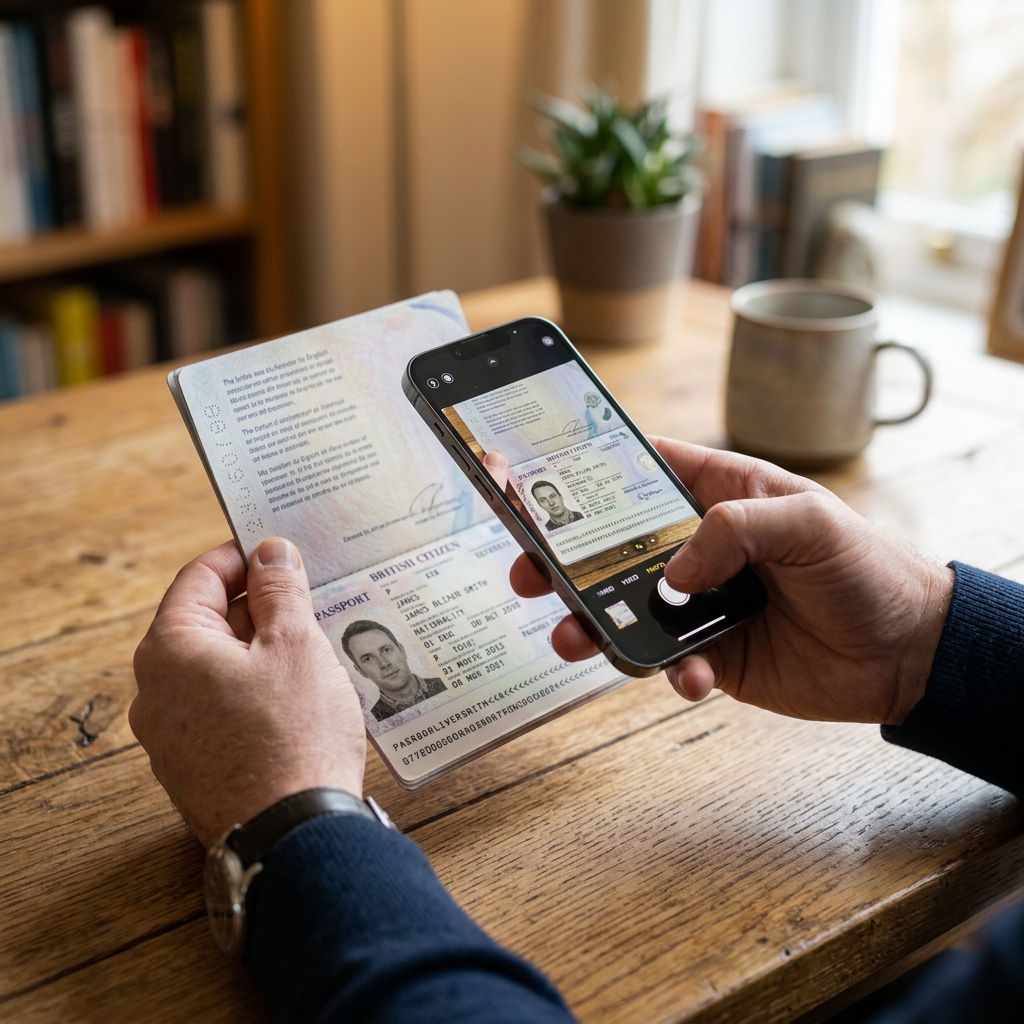
In the arrivals halls of major hubs like Delhi, Mumbai, and Bengaluru, you will find dedicated, brightly lit kiosks operated by the major telecom providers. To complete your purchase, you must present several specific documents: your original physical passport, a physical printed copy of your approved electronic travel authorization, a passport-sized photograph, and the exact address and contact number of your first night's accommodation.
The telecom agent will fill out a digital registration form, scan your passport and your printed travel documents, and capture your fingerprints using a biometric scanner. They will also take a live digital photograph of you at the kiosk.
Once the paperwork is submitted, the activation process begins. While some cards activate within two to four hours, it can legally take up to twenty-four hours for the network to fully provision your number and data services due to mandatory government security verifications.
For a broader understanding of how to navigate these initial airport logistics and protect your belongings during the busy arrival process, we highly recommend reviewing our comprehensive guide on first-time travel safety tips for foreign tourists. Travelers from Australia should be prepared to pay for the SIM card package using cash or an international credit card, though some kiosks now accept foreign digital payments.
Having all your documents organized and physically printed before you approach the counter will drastically speed up the process, allowing you to secure your connectivity and head to your hotel with peace of mind.
Network Coverage and Selecting the Right Carrier
The telecommunications market in the country is essentially a duopoly dominated by two massive network operators: Bharti Airtel and Reliance Jio. Both carriers offer exceptional 4G and rapidly expanding 5G coverage across urban centers, but their performance profiles differ slightly depending on your specific travel itinerary.
Airtel is widely regarded by seasoned travelers and expatriates as having the most reliable and consistent coverage in remote, rural, and mountainous regions. If your journey involves trekking in the Himalayas, exploring the remote deserts of Rajasthan, or navigating the dense, hilly forests of the Western Ghats, an Airtel connection will generally provide a more stable signal when you venture far from major metropolitan hubs.
Their customer service for international tourists is also highly rated, and their airport kiosks are very accustomed to processing foreign documentation. On the other hand, Reliance Jio has completely disrupted the market by offering incredibly aggressive pricing and massive data packages, backed by a vast, high-speed network that excels in cities, towns, and along major national highways.
If your itinerary is primarily focused on urban exploration, digital nomad work in major cafes, or traveling between well-connected tourist hubs, Jio offers phenomenal value for money. Vodafone Idea (Vi) remains a distant third option and is generally not recommended for short-term international visitors due to its more limited rural footprint.
When selecting your data package, you will typically be offered daily limits, such as 1.5GB, 2GB, or 3GB of high-speed data per day, which resets at midnight. For the vast majority of travelers, a 2GB per day plan is more than sufficient to support constant map navigation, ride-sharing, social media uploads, and video calls back home.
Travelers from Singapore who are accustomed to ultra-fast, ubiquitous urban networks will find that both Airtel and Jio provide a highly satisfactory and reliable digital experience throughout their stay.
Secure Application Form Filling with Get India E-Visa
As highlighted in the purchasing process, securing your local connectivity is entirely dependent on your ability to present a physical, printed copy of your approved travel authorization to the telecom agents. This makes the accuracy and successful processing of your initial immigration application the foundational step for your entire digital experience abroad.
Get India E-Visa is an independent assistance service. We are not affiliated with the Government of India, and we do not issue travel permits or guarantee approvals. All final decisions rest solely with the immigration authorities, and all applications are strictly subject to approval by Indian authorities.
Our primary role is to help international travelers prepare accurate, compliant, and perfectly formatted digital applications before they are submitted to the official portal, ensuring that your documentation is flawless and ready to be printed for both border control and telecom verification. When you utilize our platform, you will notice a strict, transparent separation between the mandatory government fees and our independent service fees.
The government fees are established and collected directly by the authorities to cover administrative processing and security checks, while our service fee covers comprehensive, human-led support, document verification, and continuous status monitoring. Our expert team manually reviews your biographical data, verifies your passport scans for optimal clarity, and ensures your digital portrait meets the strict biometric specifications required by the automated systems.
Travelers from the Netherlands appreciate our meticulous, privacy-first approach, where we only request sensitive documents through highly secure, encrypted channels after an initial assessment. By leveraging our expert review process, you significantly reduce the risk of minor typographical errors or poorly formatted uploads that lead to processing delays or correction requests.
Our dedicated team remains available to provide transparent, empathetic support, allowing you to bypass the anxiety of bureaucratic portals. We ensure your administrative foundation is rock solid, leaving you entirely free to focus on packing your bags, planning your itinerary, and preparing to stay seamlessly connected throughout your magnificent adventure.
Frequently Asked Questions
Can I buy a SIM card at Delhi airport?
Do I really need a physical printed copy of my travel authorization to get a SIM card?
Will my phone work with a local SIM card?
How long does it take for the local SIM card to activate?
Are government fees and independent service fees the same thing?
Important Disclaimer: Get India E-Visa is an independent assistance service and is not affiliated with the Government of India. We do not issue visas or guarantee approvals. All visa decisions are made solely by Indian immigration authorities. Government fees are set by Indian authorities and are separate from our service fee.