
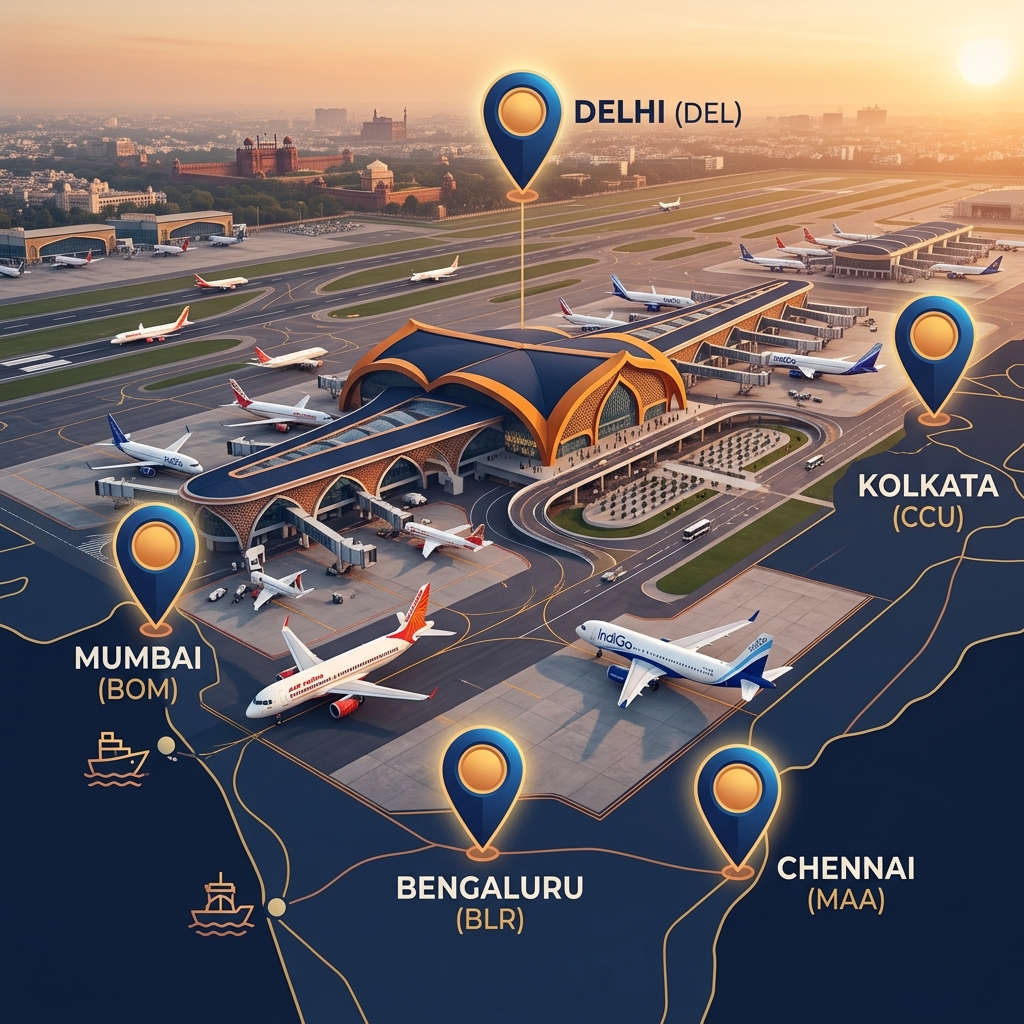
Introduction: The Layout of Indian International Transits
Navigating international layovers can be one of the most stressful aspects of long-haul travel, especially when your routing takes you through major aviation hubs in the subcontinent. Cities like New Delhi, Mumbai, and Bengaluru serve as massive global crossroads, connecting flights between Europe, Asia, and Oceania.
When you find yourself with a connecting flight in these bustling airports, understanding the precise immigration regulations is absolutely critical to avoid missed connections or unexpected legal complications. The fundamental distinction you must grasp is the difference between an airside transit and a landside entry.
An airside transit means you remain entirely within the secure, international transit zone of the airport without ever passing through immigration or customs. A landside entry, conversely, means you officially cross the border, enter the country, and subject yourself to all standard immigration laws.
For many global travelers, the layout of these massive airports can be confusing, with multiple terminals, varying airline alliances, and complex transfer corridors. Travelers from the United Arab Emirates frequently utilize these southern and western hubs as connecting points for broader Asian or European itineraries.
If your itinerary requires you to step outside the secure transit zone for any reason, the standard visa exemption instantly vanishes, and you must possess a valid travel authorization. Furthermore, airport staff are strictly bound by these regulations and will not allow exceptions for confused passengers.
Moreover, the consequences of misunderstanding these transit rules can be severe. If you arrive at your departure airport without the necessary documentation for a landside transfer, the check-in agents will categorically deny you boarding.
Airlines face massive financial penalties from immigration authorities if they transport passengers who are subsequently denied entry at a transit hub, meaning they enforce these rules with absolute strictness. Therefore, treating your transit visa requirements with the same level of importance as your final destination visa is a mandatory practice for any seasoned global traveler.
By thoroughly understanding the physical and legal layout of these international transit zones before you even board your initial flight, you can ensure your journey remains smooth, compliant, and entirely free of unnecessary bureaucratic friction.
Do You Need a Transit Visa for Short Connecting Flights?
The most pressing question for any international traveler facing a layover is whether they actually need to apply for formal travel documentation. The immigration authorities operate under a very specific, globally recognized framework known as the 24-hour transit rule.
If your connection meets a strict set of criteria, you are completely exempt from needing any form of transit or tourist authorization. To qualify for this exemption, you must remain strictly within the designated international transit area of the airport.
You cannot pass through immigration control, you cannot collect your checked luggage, and you cannot step outside the airport terminal. Furthermore, your entire journey must be booked on a single ticket or a single Passenger Name Record, meaning the airline is responsible for transferring your baggage directly to your final destination.
Finally, your onward flight must depart within 24 hours of your initial arrival. If you meet all these conditions, you can comfortably wait in the transit lounges, enjoy the airport amenities, and board your next flight without any immigration clearance.
Travelers from the United States flying on major alliance carriers often benefit from this seamless airside transfer process when routing through Delhi or Mumbai to reach Southeast Asia. However, the moment any single one of these conditions is broken, the 24-hour exemption is nullified.
If you need to change terminals in a way that forces you outside the secure zone, or if your layover stretches beyond a full day, you are legally required to secure a valid entry permit before you board your first flight. Airlines will actively check for this permit at your origin departure gate to avoid heavy fines.
Understanding these precise conditions ensures you do not unnecessarily apply for documentation when a simple airside transfer suffices, while also warning you when a formal application is absolutely mandatory.
Terminal Transfers and Luggage Re-Checkin Pitfalls
Despite the clear 24-hour airside exemption rule, countless international travelers inadvertently trap themselves in situations that force a landside entry, leading to severe travel disruptions if they lack the proper documentation. The most common pitfall involves terminal transfers.
In major hubs like New Delhi, the domestic and international terminals, as well as different low-cost carrier terminals, are often physically separated. If your inbound international flight arrives at one terminal and your outbound flight departs from another, and there is no secure, airside shuttle bus connecting them, you will be forced to pass through immigration, claim your bags, and physically travel to the next terminal.
Another massive trap is the "self-transfer" flight. If you booked two separate tickets on different airlines to save money, the first airline will only check your bags to the layover city. You will be forced to cross immigration, collect your luggage from the carousel, and stand in line at the departures hall to re-check your bags with the second airline.
Furthermore, any layover that exceeds 24 hours automatically requires a formal entry permit, even if you plan to sleep in an airside transit hotel. Travelers from Australia booking complex, multi-carrier itineraries must meticulously review their booking confirmations to ensure their baggage is checked through.
If you realize your itinerary forces a landside entry, you must secure your documentation in advance. To ensure your specific layover airport supports your transit plans, we highly recommend reviewing our comprehensive guide on the designated ports of entry for electronic travel authorizations.
Additionally, travelers must be highly aware of the specific operating hours and facilities within the transit zones of these major airports. Not all terminals operate twenty-four hours a day, and some international transit lounges may close for cleaning or maintenance during the late-night hours.
If you are forced to wait in a public, landside area due to terminal closures, you will once again trigger the requirement for a formal entry permit. Always verify the specific transit facilities available at your layover airport for your exact arrival and departure times to avoid being caught off guard by unexpected logistical hurdles.
Transit Options: 30-Day eVisa vs. Traditional Transit Visa
When your itinerary dictates that you must cross immigration during your layover, you are generally faced with two distinct documentation pathways: the traditional paper transit visa or the modern electronic tourist authorization. The traditional transit visa is a highly specific, short-term document typically valid for up to 15 days, allowing a brief stay solely for the purpose of catching an onward flight.
However, securing this traditional paper document requires visiting a physical embassy or consulate, surrendering your passport, and navigating a manual, time-consuming bureaucratic process that is entirely unsuited for modern, fast-paced travel. In stark contrast, the 30-day electronic tourist authorization offers a vastly superior, highly flexible alternative.
Priced at a standard government fee of around 24 dollars for most nationalities, this digital permit allows double entry and is processed entirely online within a matter of days. Travelers from the United Kingdom and Canada almost universally prefer the 30-day electronic option because it is faster to obtain, often cheaper when factoring in courier and agency fees associated with paper applications, and provides the flexibility to actually leave the airport and explore the city or rest in a comfortable off-site hotel during a long layover.
Because the electronic system is designed for rapid processing and immediate digital delivery, it completely eliminates the stress of physical passport surrender. If your connection requires you to clear customs, applying for the standard 30-day digital tourist permit is overwhelmingly the most strategic, cost-effective, and reliable method to ensure your transit proceeds without a hitch, giving you total peace of mind as you navigate your complex global routing and avoiding the rigid limitations of a dedicated transit document.
Navigating Transit Applications Safely with Get India E-Visa
Securing the correct travel authorization for a complex international transit requires precision, and utilizing professional guidance can significantly reduce the risk of costly delays or denied boarding. Get India E-Visa is an independent assistance service.
We are not affiliated with the Government of India, and we do not issue travel permits or guarantee approvals. All final decisions rest solely with the immigration authorities, and all applications are strictly subject to approval by Indian authorities.
Our primary role is to help international travelers prepare accurate, compliant, and perfectly formatted digital applications before they are submitted to the official portal. When you utilize our platform to secure your transit documentation, you will notice a strict separation between the mandatory government fees and our independent service fees.
The government fees are established and collected directly by the authorities to cover administrative processing and security checks, while our service fee covers comprehensive, human-led support. This includes immediate manual document verification, precise digital photo formatting, and continuous status monitoring to alert you the second your approval is granted.
We employ a strict privacy-first approach, collecting only basic itinerary details initially before requesting sensitive documents like passport scans through highly secure, encrypted channels. By leveraging our expert review process, you significantly reduce the risk of common documentation errors that trigger correction requests, ultimately protecting your tight travel timeline and ensuring your layover is legally covered.
Our dedicated team remains available to provide transparent, empathetic support, allowing you to bypass the stress of bureaucratic portals and focus entirely on your onward journey with complete confidence and legal compliance, knowing your digital paperwork is perfectly aligned with international aviation standards. Furthermore, our team stays constantly updated on the latest immigration policy shifts, ensuring that the advice and formatting checks we provide reflect the most current regulations enforced at major international transit hubs.
Frequently Asked Questions
Do I need a transit visa if I have a layover in Delhi for 4 hours without leaving the airport?
What if I booked two separate tickets and need to re-check my luggage?
Can I leave the airport to sleep in a nearby hotel during a 14-hour layover?
Is the traditional paper transit visa faster than the electronic tourist authorization?
What happens if my connecting flight is delayed and my layover exceeds 24 hours?
Important Disclaimer: Get India E-Visa is an independent assistance service and is not affiliated with the Government of India. We do not issue visas or guarantee approvals. All visa decisions are made solely by Indian immigration authorities. Government fees are set by Indian authorities and are separate from our service fee.