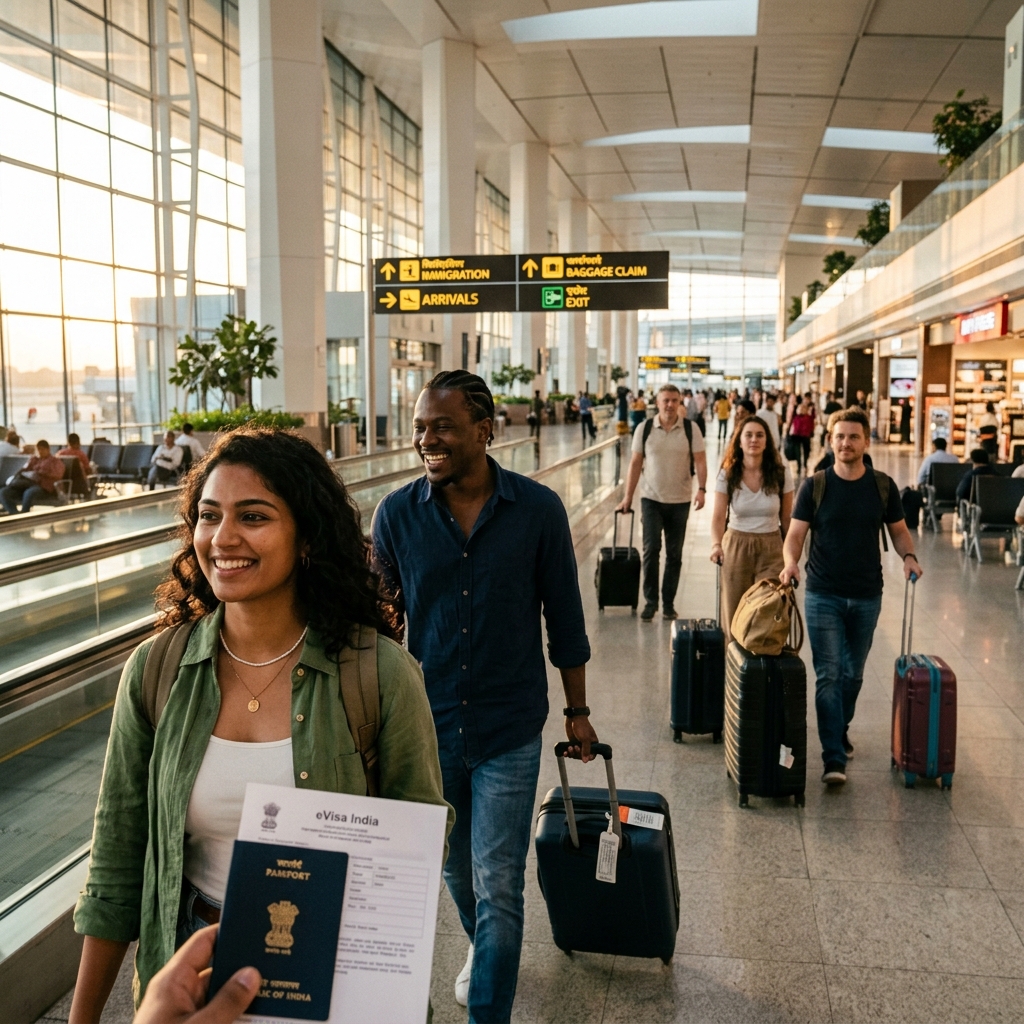
Introduction: The Frustration of a Frozen Portal
Planning an international journey to the vibrant and culturally rich landscapes of the subcontinent requires meticulous preparation, and securing your digital travel authorization is the most critical first step. You have carefully gathered your passport details, formatted your digital portrait to meet strict biometric specifications, and mapped out your entire itinerary.
You sit down at your computer, navigate to the application portal, and begin entering your information. Then, without warning, the page freezes, a generic server error message appears, or the site simply refuses to load. Discovering that the India eVisa website is down is an incredibly frustrating and stressful experience, especially when your departure date is steadily approaching.
This sudden technical roadblock leaves many international travelers feeling anxious and entirely unsure of how to proceed with their travel plans. Travelers from the United States and the United Kingdom frequently encounter these unexpected digital hurdles when attempting to submit their applications during peak global travel seasons.
The digital framework relies on complex, centralized servers to process millions of individualized requests from across the globe, and the intersection of high traffic volumes with legacy infrastructure often results in unintended friction. When the system becomes unresponsive, you might worry that your partially entered data has been lost, or that your payment was captured without generating a confirmation.
Understanding why these systemic outages occur and knowing the exact technical workarounds required to bypass them is essential for maintaining your composure and keeping your travel itinerary on track. While the digital system is designed to be accessible, the reality of global server management means that temporary downtimes are an unavoidable part of the process.
By familiarizing yourself with the underlying causes of these portal failures and the strategic steps you can take to successfully push your application through, you can navigate this administrative hurdle with complete confidence, keeping in mind that all travel permissions are strictly subject to approval by Indian authorities.
Why Does the Official eVisa Portal Go Down?
When you encounter a frozen screen or a timeout error, it is rarely a reflection of your personal internet connection or device. Instead, it is usually the result of systemic strain on the centralized immigration database.
The primary reason the official portal experiences downtime is the sheer volume of global traffic it must handle simultaneously. Every single day, thousands of international explorers, corporate professionals, and medical patients from across the globe are attempting to access the system, upload heavy document files, and process secure financial transactions.
This massive, concurrent load can easily overwhelm the server capacity, leading to severe bottlenecks, slow page rendering, and eventual timeouts. Travelers from Australia applying during their evening hours might inadvertently be hitting the portal during peak daytime traffic in the destination country, exacerbating the server strain.
Furthermore, the digital infrastructure relies on complex, interconnected banking gateways to process international payments. If the secure handshake between the immigration database and the third-party payment processor drops or experiences latency, the entire portal can freeze to prevent incomplete or duplicate financial transactions.
Scheduled maintenance is another frequent culprit. To ensure the security and integrity of the database, the authorities must periodically take the system offline to install critical security patches, update server protocols, and perform routine data backups.
These maintenance windows are often scheduled during what is presumed to be off-peak hours, but global travel never truly sleeps, meaning applicants from different time zones will inevitably encounter a locked portal. Additionally, the underlying server architecture can occasionally struggle with the massive file sizes of high-resolution passport scans and digital portraits, causing memory leaks that crash individual user sessions.
Recognizing that these outages are a mechanical reality of global digital infrastructure allows you to approach the situation with a calm, strategic mindset.
Technical Workarounds to Try When the Site is Unresponsive
If you find yourself staring at an unresponsive portal, there are several immediate, actionable technical steps you can take to successfully bypass the digital friction and push your application through. First and foremost, clear your browser cache and cookies, or better yet, switch to an entirely different web browser.
If you are using Safari, switch to Chrome or Firefox. Stored cache data from previous sessions or conflicting browser extensions can easily interfere with the secure scripting required by the application portal, causing the page to loop or freeze when you attempt to upload documents or submit forms.
Next, disable all ad-blockers, pop-up blockers, and privacy extensions. The portal frequently relies on secondary windows or overlays to process secure payment gateways and verification captchas. If your browser blocks these scripts, the system will hang indefinitely.
Timing your submission is another highly effective workaround. Because server load is heavily dependent on global time zones, attempting to apply during off-peak hours in the destination country can drastically improve your chances of a smooth session.
The optimal window is generally during the late night or early morning hours in India, when domestic traffic is at its lowest and the servers have the bandwidth to process international requests without timing out. Travelers from Germany can easily adjust their schedules to submit their applications during the European afternoon, which aligns perfectly with the destination's late evening.
Additionally, ensure that your document files are optimized before you even attempt to load the upload page. If your passport scan is excessively large, it can trigger a server timeout during the upload process. For detailed guidance on optimizing your files to prevent these specific crashes, we highly recommend reviewing our comprehensive guide on solving PDF upload errors on the India eVisa portal.
By methodically working through these technical troubleshooting steps and strategically timing your session, you can bypass the most common digital roadblocks and successfully finalize your application without unnecessary delays.
Timeline Risks: When to Switch to an Alternative
While technical workarounds and strategic timing can resolve most temporary portal outages, there are situations where the digital infrastructure remains unresponsive for an extended period, creating severe timeline risks for your upcoming journey. If your departure date is rapidly approaching and the official portal continues to throw server errors or fail to process payments, you must shift your strategy from technical troubleshooting to active timeline management.
The standard processing time for a digital travel authorization is typically three to five business days, meaning that every day the portal remains inaccessible is a day lost in the review queue. If you are within a week of your flight and still cannot successfully submit your application, relying solely on the hope that the servers will spontaneously recover is a dangerous gamble that could result in missed flights and ruined itineraries.
In these high-stakes scenarios, it is crucial to understand the limitations of the digital framework. There is no official express tier for the electronic system that allows you to bypass a crashed server. The authorities do not offer a dedicated phone line to manually push an application through during a systemic outage.
If the digital gateway is completely blocked, the only alternative is to explore the traditional consular route. This involves physically visiting or mailing your documents to the nearest embassy or consulate to apply for a traditional paper document.
However, this process is inherently slower, often taking several weeks, and requires surrendering your physical passport. Travelers from Belgium facing imminent departure dates must weigh the logistical nightmare of an embassy visit against the possibility of rescheduling their flights.
If rescheduling is financially viable and less stressful than navigating a foreign consular system, it may be the most pragmatic choice. Ultimately, understanding when to abandon the digital portal and pivot to alternative travel plans or traditional diplomatic channels is essential for protecting your financial investment and avoiding the immense stress of being denied boarding at the airport.
Seamless Submissions and Queue Management by Get India E-Visa
Navigating the unpredictability of international government servers can be incredibly stressful, which is why utilizing professional assistance can provide immense peace of mind and protect your travel timeline. Get India E-Visa is an independent assistance service.
We are not affiliated with the Government of India, and we do not issue travel permits or guarantee approvals. All final decisions rest solely with the immigration authorities, and all applications are strictly subject to approval by Indian authorities.
Our primary role is to help international travelers prepare accurate, compliant, and perfectly formatted digital applications, and to manage the submission process seamlessly, even when the official infrastructure fails. When you utilize our platform, you will notice a strict separation between the mandatory government fees and our independent service fees.
The government fees are established and collected directly by the authorities to cover administrative processing and security checks, while our service fee covers comprehensive, human-led support and advanced queue management. To eliminate the frustration of portal downtime, our platform employs a secure, localized data storage system.
Once you complete your application and upload your documents through our encrypted channels, our team manually verifies every detail for compliance. If the official portal is experiencing an outage or severe latency, we do not force the submission and risk a corrupted file or a lost payment.
Instead, we securely hold your verified application in our queue and continuously monitor the server status. The exact moment the official gateway stabilizes and comes back online, our dedicated team immediately pushes your flawless application into the processing queue.
This strategic queue management ensures that your application is submitted at the optimal time, completely bypassing the server crashes and payment timeouts that plague independent applicants. Furthermore, if a payment gateway failure does occur during our submission attempt, our team is equipped to handle the complex resolution process.
To understand how we navigate these specific financial roadblocks, review our detailed guide on India eVisa payment failure solutions. By leveraging our expert monitoring and secure queue management, you completely bypass the anxiety of frozen portals, ensuring your application is successfully submitted and your travel plans remain entirely on schedule.
Frequently Asked Questions
What should I do if the Indian visa website crashes while I am making a payment?
Will my application data be lost if the portal times out while I am filling out the form?
Is there an emergency phone number to call if the official portal is down for days?
Can I use a mobile phone to apply if my desktop browser keeps crashing?
Are government fees and independent service fees the same thing?
Important Disclaimer: Get India E-Visa is an independent assistance service and is not affiliated with the Government of India. We do not issue visas or guarantee approvals. All visa decisions are made solely by Indian immigration authorities. Government fees are set by Indian authorities and are separate from our service fee.